
Thursday, September 14, 2017

Tuesday, August 1, 2017
Zebra Finch Color Mutations

Zebra Finch Color Mutations
A Photo blog by Mohammad Abdullah
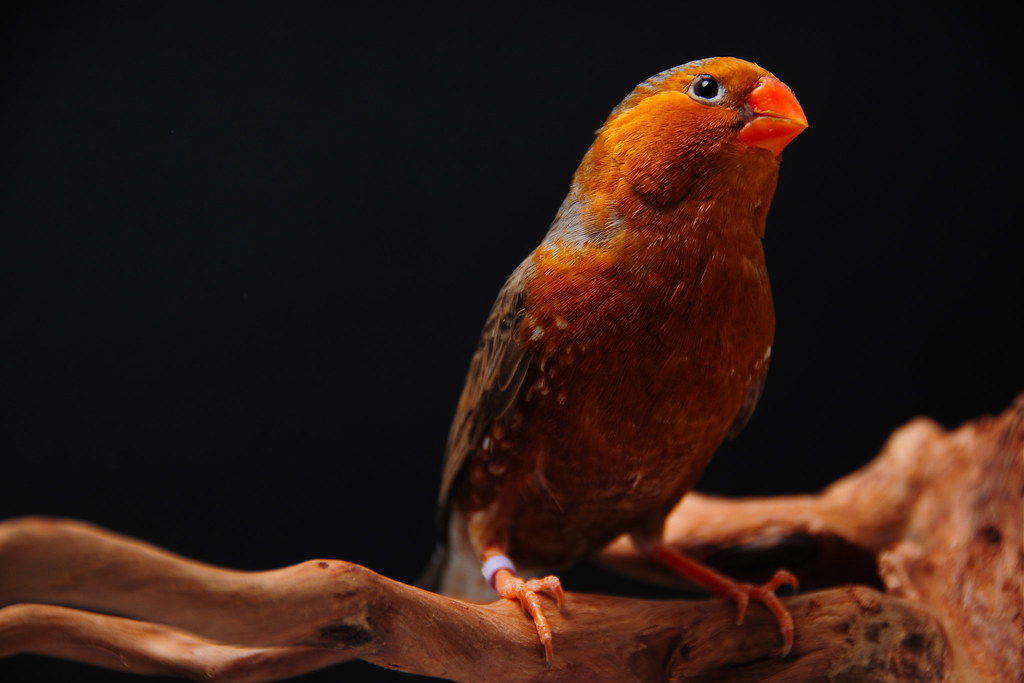
Last week I spent the morning enjoying
two passions. It’s no secret that I love photography, and I’ve loved
birds for as long as I can remember. My brother-in-law breeds zebra
finches. I should point out immediately that I’m not talking about the
bird market in Rai. These are the best of the best. This is a
private ‘collection’ and the guys match different pairs, in order to
achieve wierd and wonderful colours with their off-spring. It’s science
and art – at the same time.

They’re designing a website, and needed
quality shots of their birds. The perfect opportunity for me to try
something new. The studio was a modified cage with, black cardboard for
the background. This dark backdrop is perfect to bring out the
magnificent colours and it means I don’t worry too much about shadows.
If you don’t know these birds, they’re tiny! The size of a finger
beak-to-tail. They’re full of energy and love to hop and fly around.
Their wings remind me of hummingbirds. The shutter speed had to be fast
(1/250 seconds for most shots) which also allowed me to hand-hold the
camera. This allowed me to control the composition better. The
lighting had to be right. I used the window for natural light and
bounced the external flash off the ceiling.

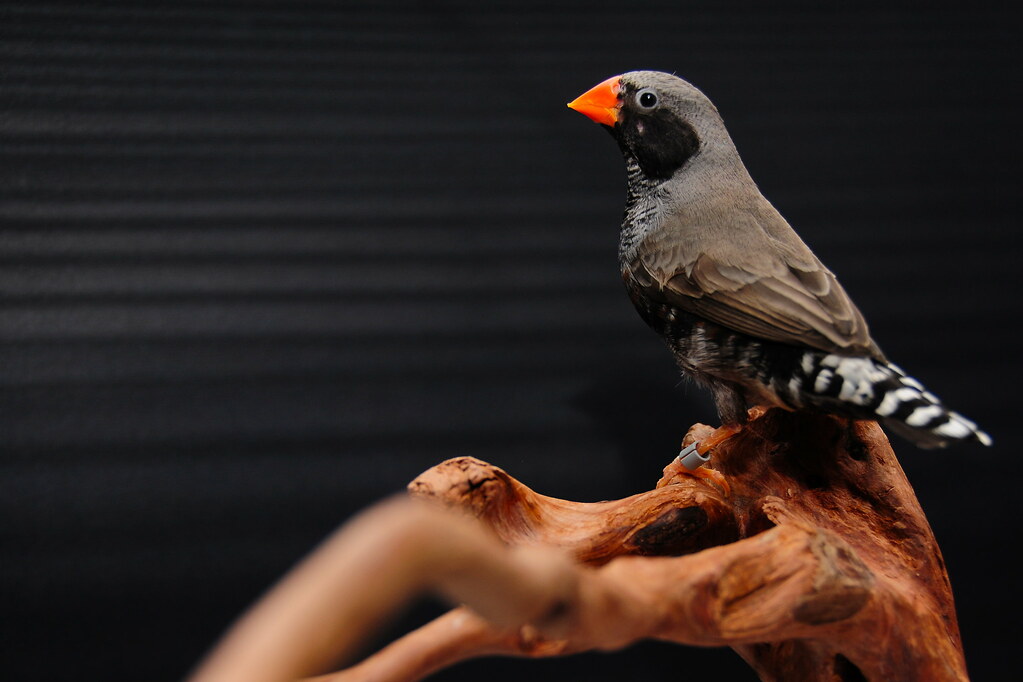
To our untrained eye, these are cute
,colourful, and energetic birds. However to the experts, the one below –
for example – is a masterpiece in-the-making. Apparently…
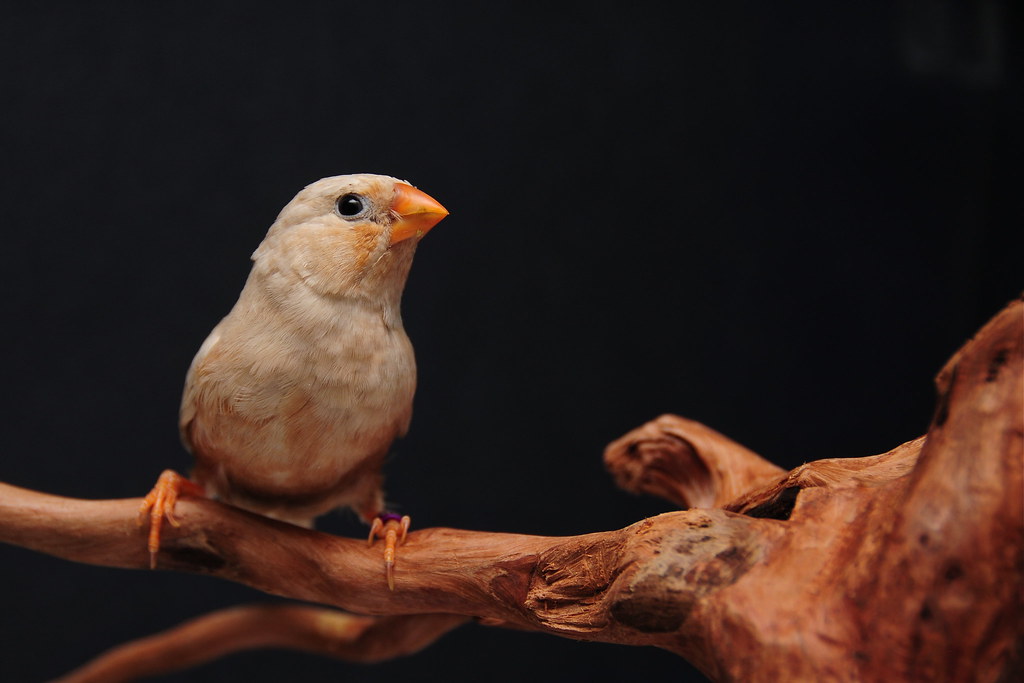
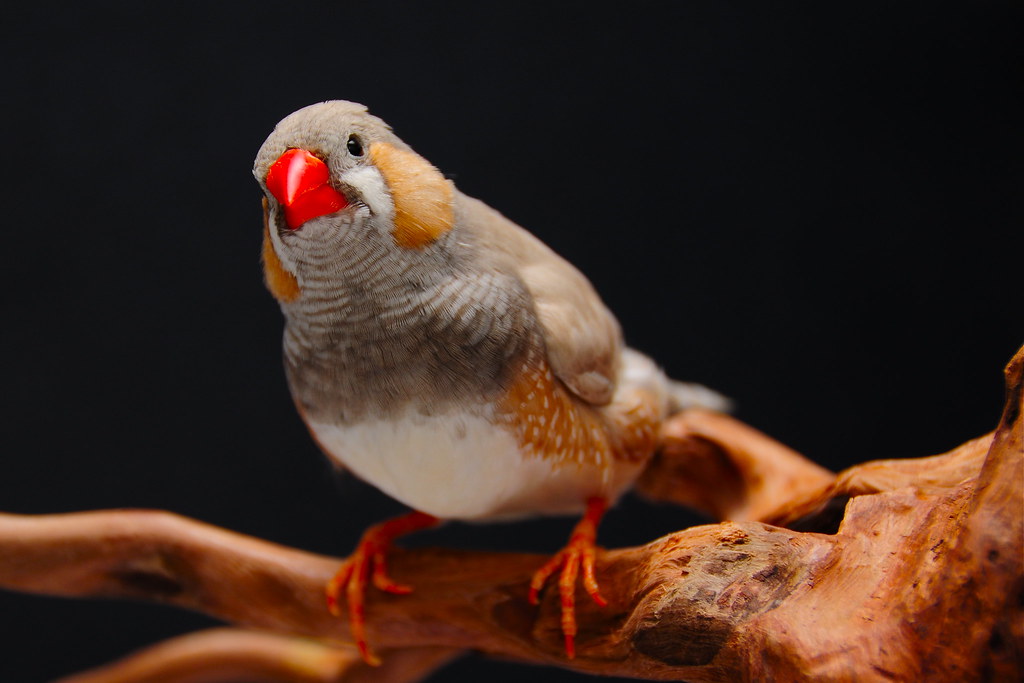

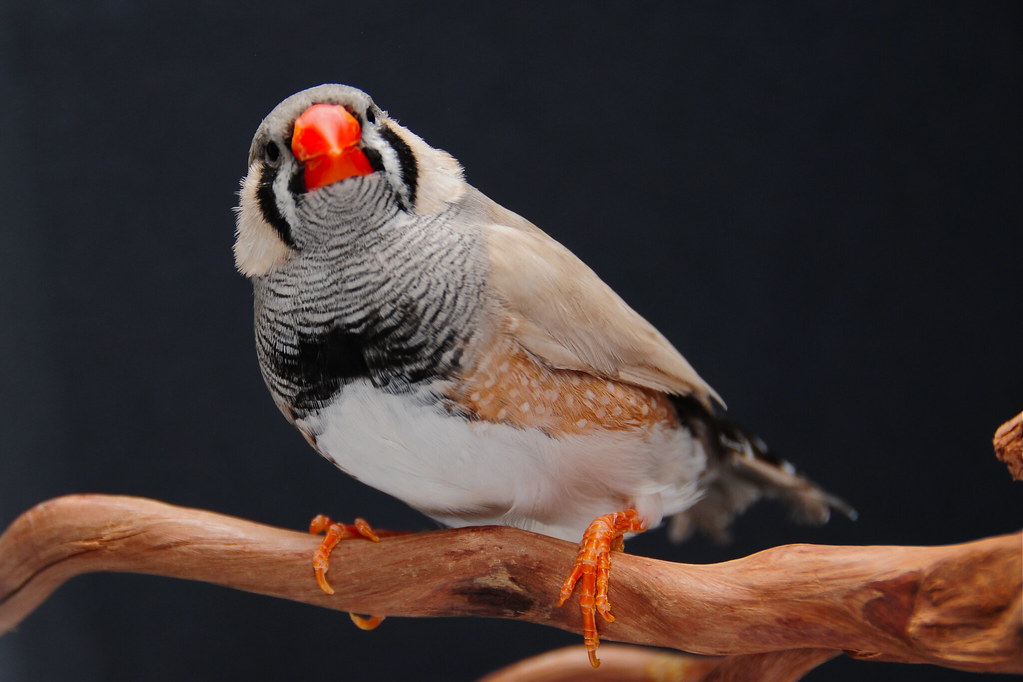

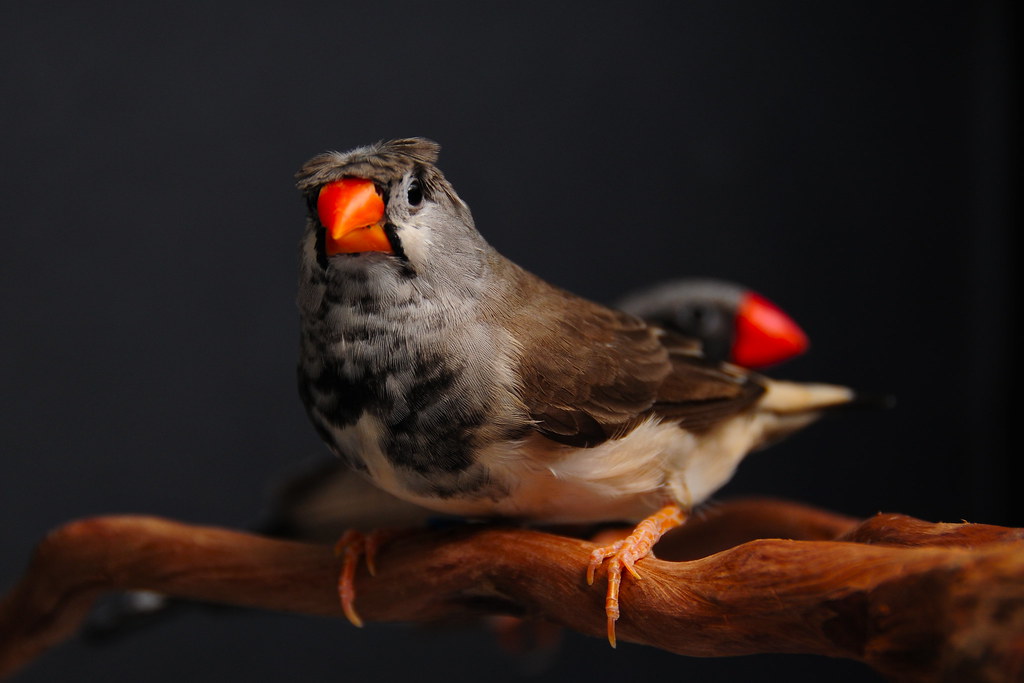

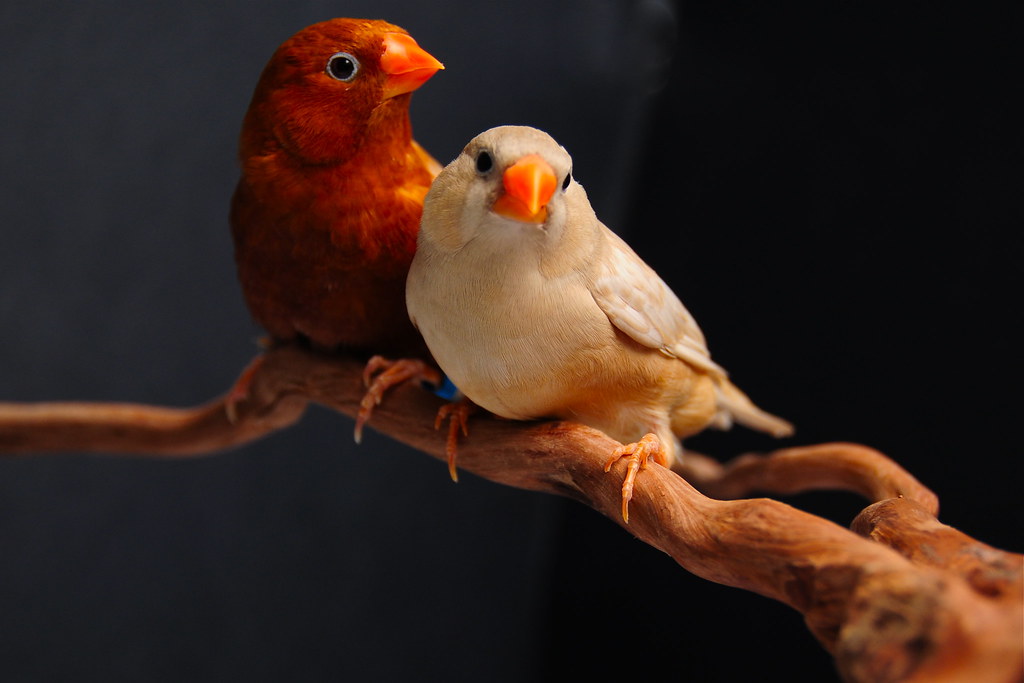
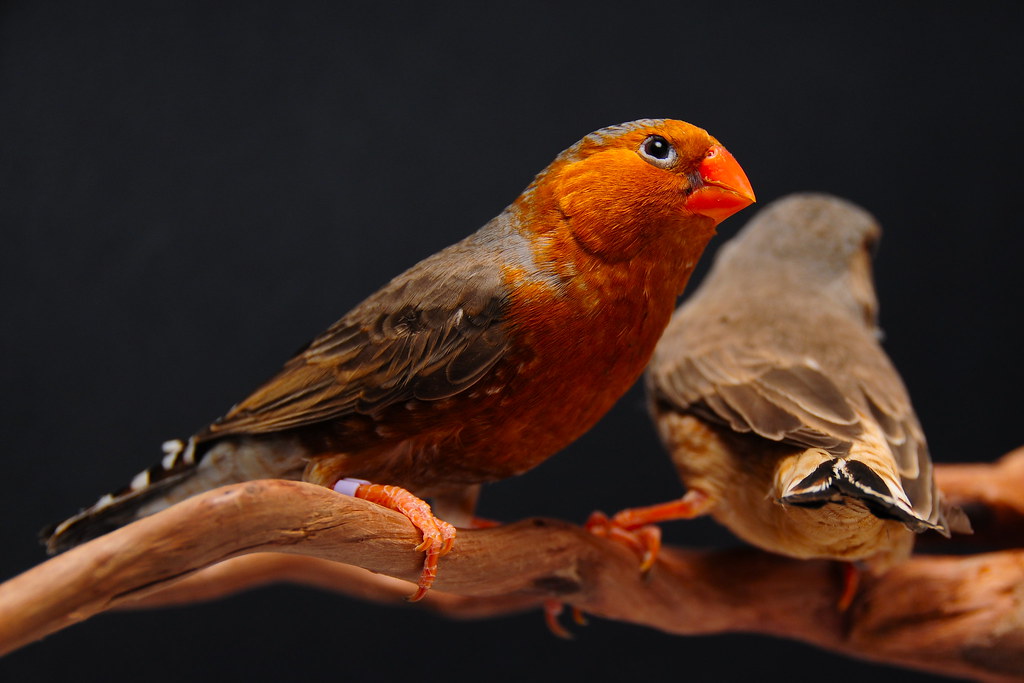

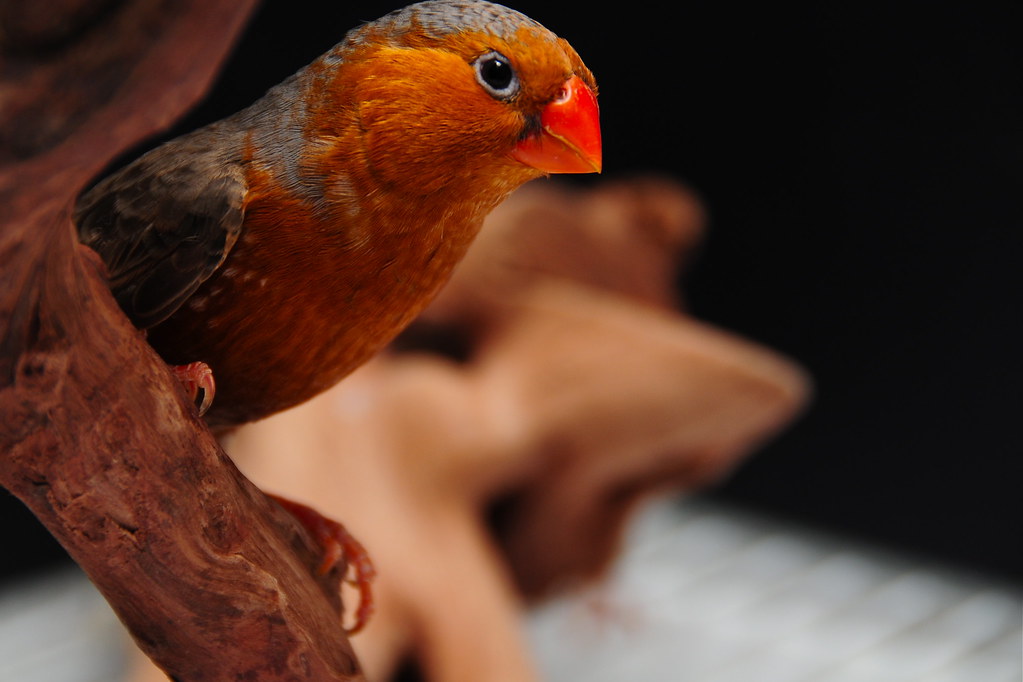

With the dark background and the
beautiful branch, I wanted to achieve a natural environment with a
studio feel. These very birds that don’t seem to ever stop moving,
look as if they were posing for my camera.
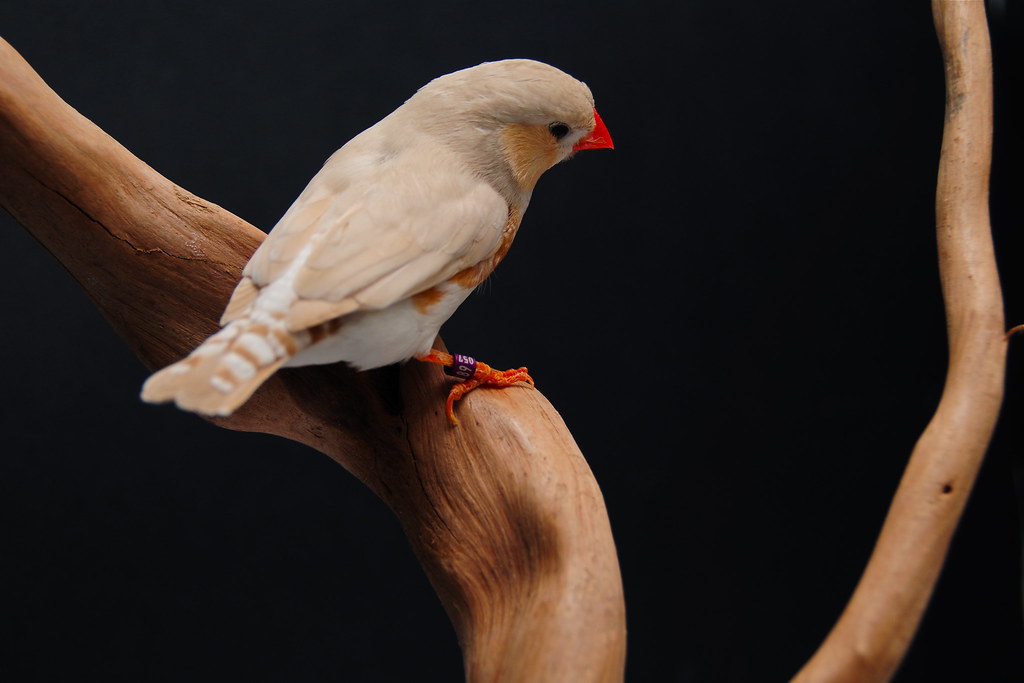
I hope you enjoy the collection. I’m pleased with the results and my laptop background is currently the image above.
BuYousef.net
A Photo blog by Mohammad Abdullah
Saturday, October 1, 2016
Baby Zebra Finch
Bad parenting? Baby zebra finch don’t tolerate it. They look for better role models

Newly hatched chicks whose parents are poor foragers often get stressed from lack of food, leading them to quickly write off mom and dad. Babies a few days old run off in search of better role models -- adults that know what they're doing.
In a two-year study that followed chicks from the moment they were hatched to the moment they were ready to leave the nest a little more than a month later, researchers found that "stressed chicks got away from their parents earlier," said Neeltje Boogert, a biologist at the University of Cambridge who led the research. "They didn't copy their parents behavior."
Dumping clueless parents for better fill-ins is a positive sign for the finch. "If you had a rough start early in life, you might not be doomed," Boogert explained. Nothing in the study suggested this behavior is applicable to other animals, or showed any parallels to humans, Boogert said.
Scientists have long studied the consequences of stress on individual animals to examine its impact on their behaviors, Boogert said. She wanted to take it another step by studying social animals such as the finch to determine how they coped. Boogert and her co-authors were slightly surprised to see youngsters ditch their parents so quickly. The findings were published Thursday in the journal Current Biology.
When food is scarce, or the temperature in a habitat is too cold, resulting from bad parenting, stress hormones are chronically elevated. The consequence in animals, like humans, is often depression, anxiety, panic attacks, sleep disorder and other detrimental impacts.
The question no one had sought to answer, as far as Boogert knew, is how a social animal would compensate. A study authored by Boogert last year said adding stress hormones to the diets of baby finch had a positive effect because they ended up with more friends by adulthood than young birds that were not stressed. But that study didn't tell researchers why stressed chicks were making so many friends.
The study didn't bother with studying how parents react to the put-down of being replaced. Clinical stares were glued on the jittery chicks.
"You can turn to other sources of information," the author said. "I think it is actually a positive message. Instead of being stuck you can change who you're going to follow and make a better life for yourself."
Darryl
Fears has worked at The Washington Post for more than a decade, mostly
as a reporter on the National staff. He currently covers the
environment, focusing on the Chesapeake Bay and issues affecting
wildlife.
Link: https://www.washingtonpost.com/news/speaking-of-science/wp/2015/07/23/baby-finch-dont-tolerate-bad-parents-they-find-better-role-models-study-says/
Link: https://www.washingtonpost.com/news/speaking-of-science/wp/2015/07/23/baby-finch-dont-tolerate-bad-parents-they-find-better-role-models-study-says/
Friday, September 30, 2016
The Zebra Finch Society – Founded in 1952

From original paintings in acrylics by Alan Coles
showing the variation between the standard colours of quality exhibition cock birds.
Print 1. Normal, Silver, Fawn and Cream
Print 2. Pied, CFW, Lightback and Penguin
Print 1. Normal, Silver, Fawn and Cream
Print 2. Pied, CFW, Lightback and Penguin
Founded in 1952, the ZFS is the oldest national society dedicated solely to Zebra Finches
Offers information on standards, showing, and the club, along with a FAQ section, items for sale, and links.

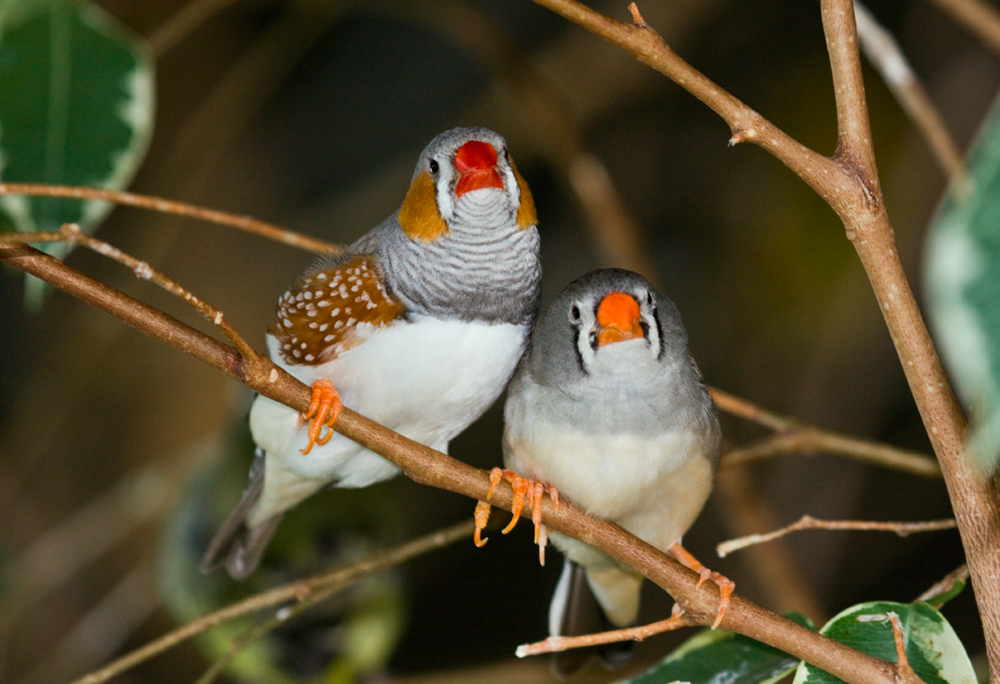
Link: http://www.zebrafinchsociety.org.uk/
Wednesday, June 1, 2016
Crows form social networks and pass on information to their friends.
Feathered gossips: Researchers find crows pass on information to their friends
- Researchers say crows’ socialising patterns were like 'friendship networks in humans'
- The bird would rather socialise with friends than family
Researchers at a Scottish
university have found that crows are far more social than previously
thought - and could be using their friendships to pass on information.
St Andrews University researchers fitted more than 40 New Caledonian crows with radio tags - and found they all spent much more time socialising with other, unrelated, crows than with their own families.
The crows, from New Caledonia, a remote island in the South Pacific, are renowned for their ability to use tools to get food.

Now the St Andrews team, working with
researchers from Washington University in America, say the creatures
savvyness could stem from their friendliness - suggested that when they
meet up they could be passing on tips to each other.
Project leader Dr Christian Rutz, of school of biology at St Andrews, said the crows’ socialising patterns were like 'friendship networks in humans'.
He said: “We all know how fast fads can spread, whether it is fashion or music preferences, or new consumer products.
'But, importantly, successful diffusion depends on people’s ability to observe and copy other individuals’ choices and behaviours.
'This is why we wanted to know how often crows meet other crows in the course of a week.
'Whenever two marked crows get close to each other, their tags exchange radio-signals.
'It is as if the birds are swapping business cards when they meet.
'The miniature tracking devices, each the weight of a £2 coin, were attached to the birds as back-packs which can both transmit and receive radio-signals, unlike conventional wildlife radio-tags.'
The back-packs allowed researchers to study the birds’ social relationships and revealed a 'surprising' amount of contacts.
The study’s main aim is to understand how information on using tools to find food may be shared in wild crow populations.
The social network revealed a highly interconnected population, in which most birds associated with non-family members within just a few days.
Researchers believe this creates potential for social information to be passed around in crow populations.
The birds come from New Caledonia, a remote island in the South Pacific where the study’s fieldwork took place.
The crows are known for using tools to get to deadwood prey and vegetation.
 Scientists have suggested
that this 'sophisticated tool-use behaviour' may be the outcome of the
birds passing information to each other.
Scientists have suggested
that this 'sophisticated tool-use behaviour' may be the outcome of the
birds passing information to each other.
Dr John Burt and Professor Brian Otis from Washington University invented the tracking technology used by the study, called 'Encounternet'.
Dr Burt said: 'It was fantastic for us to see these tags being deployed on wild animals.
'The technology worked beautifully and generated some fascinating new insights into the biology of these remarkable birds.'
This is the first time that tags like this have been attached to wild birds.
They have been used previously on larger animals such as zebras, cattle or rabbits but until now, tags were far too heavy for deployment on birds.
For the study, 41 crows were fitted with the tags, with each unit weighing only some nine grams.
The units were mounted onto the birds as backpacks, using harnesses that degrade over time.
The study was funded by the UK’s Biotechnology and Biological Sciences Research Council (BBSRC).
A report of the research is published in the academic journal Current Biology.
St Andrews University researchers fitted more than 40 New Caledonian crows with radio tags - and found they all spent much more time socialising with other, unrelated, crows than with their own families.
The crows, from New Caledonia, a remote island in the South Pacific, are renowned for their ability to use tools to get food.
Researchers who gave crows backpacks to track
their social interaction have found they have human-like networks of
friends, and pass information among each other.
Project leader Dr Christian Rutz, of school of biology at St Andrews, said the crows’ socialising patterns were like 'friendship networks in humans'.
He said: “We all know how fast fads can spread, whether it is fashion or music preferences, or new consumer products.
'But, importantly, successful diffusion depends on people’s ability to observe and copy other individuals’ choices and behaviours.
'This is why we wanted to know how often crows meet other crows in the course of a week.
'Whenever two marked crows get close to each other, their tags exchange radio-signals.
RELATED ARTICLES


'The miniature tracking devices, each the weight of a £2 coin, were attached to the birds as back-packs which can both transmit and receive radio-signals, unlike conventional wildlife radio-tags.'
The back-packs allowed researchers to study the birds’ social relationships and revealed a 'surprising' amount of contacts.
The study’s main aim is to understand how information on using tools to find food may be shared in wild crow populations.
The social network revealed a highly interconnected population, in which most birds associated with non-family members within just a few days.
Researchers believe this creates potential for social information to be passed around in crow populations.
The birds come from New Caledonia, a remote island in the South Pacific where the study’s fieldwork took place.
The crows are known for using tools to get to deadwood prey and vegetation.
Crows have previously been seen using tools. Now, it appears they form social networks and pass on information to their friends.
Dr John Burt and Professor Brian Otis from Washington University invented the tracking technology used by the study, called 'Encounternet'.
Dr Burt said: 'It was fantastic for us to see these tags being deployed on wild animals.
'The technology worked beautifully and generated some fascinating new insights into the biology of these remarkable birds.'
This is the first time that tags like this have been attached to wild birds.
They have been used previously on larger animals such as zebras, cattle or rabbits but until now, tags were far too heavy for deployment on birds.
For the study, 41 crows were fitted with the tags, with each unit weighing only some nine grams.
The units were mounted onto the birds as backpacks, using harnesses that degrade over time.
The study was funded by the UK’s Biotechnology and Biological Sciences Research Council (BBSRC).
A report of the research is published in the academic journal Current Biology.
Wednesday, May 25, 2016

Wednesday, April 27, 2016
Enthralling new books on bird behaviour

Male bowerbirds’ creations look like
little art galleries — built to impress the females
Link: http://www.spectator.co.uk/2016/04/which-came-first-the-bowerbird-or-the-egg/
Sunday, April 17, 2016
Zebra Finch in HD
Zebra finch are a great little bird, very hardy and come in a range of different colours.
SUBSCRIBE for more videos
https://www.facebook.com/ZeusAviaryYo...
SUBSCRIBE for more videos
https://www.facebook.com/ZeusAviaryYo...
Saturday, April 16, 2016
Zebra Finch Varieties
Animal Species:Zebra Finch, Taeniopygia guttata
With a time-span of 70 to 80 days from hatching to becoming
sexually active, the Zebra Finch is one of the fastest maturing bird
species recorded.

Zebra Finch, Taeniopygia guttata
Photographer: Ken Glasson © Ken Glasson
Photographer: Ken Glasson © Ken Glasson
Standard Common Name
Zebra FinchIdentification
Zebra Finches are mainly grey, with characteristic black 'tear drop' eye stripes and 'zebra like' black and white barring on the rump and upper tail. The throat and upper breast are pale grey, with fine black barring, and there is a broad black band on upper chest. The sides of the belly are chestnut with many white spots. The remainder of the belly and the undertail are white. The male is distinguished from the female by its orange chestnut cheek patches, a character that gave the species the alternative name of Chestnut-eared Finch. Both sexes have red eyes and bill. The legs and feet are orange yellow. Young are similar in plumage to the female, except that the clear black and white markings of the head are absent. The eyes are grey-brown and the bill is black.Size range
10 cm to 12 cmDistribution
Zebra Finches are the most common and widespread of Australia's grassfinches, found across the Australian mainland, with the exception of Cape York Peninsula and some coastal areas. They are also found in Timor and the Lesser Sunda Islands.Habitat
Zebra Finches are most commonly found in the drier areas of Australia, living year round in social flocks of up to 100 or more birds. They can be found in a variety of habitats, mainly dry wooded grasslands, bordering watercourses.Feeding and Diet
Zebra Finches feed in large flocks on fallen or ripening grass seeds. Insects may be taken at any time of the year, but are particularly favoured when feeding young. Feeding takes place on the ground, and, unlike some other grassfinches, birds never pull seed heads down with their feet.Communication
The most common calls are a loud nasal "tiah", often given in flight, and a soft "tet tet" in close contact.Mating and reproduction
Zebra Finches pair for life. The female alone selects the nest site, but both birds care for the eggs and young. The male gathers almost all the nesting material, with which the female constructs the loose dome-shaped nest. Birds have also been reported to nest in hollows in the ground, although this behaviour is uncommon.Breeding Season: October to April; varies depending on rainfall.
Economic/social impacts
The introduction of artificial dams and water tanks has actually increased the Zebra Finch's natural range, as the birds need to drink on a regular basis.Classification
- Species:
- guttata
- Genus:
- Taeniopygia
- Family:
- Estrildidae
- Order:
- Passeriformes
- Class:
- Aves
Ondine Evans , Web Researcher/Editor
Last Updated:
Tags
BIBY,
0
0
0
-
Zebra Finch, Taeniopygia guttata
With a time-span of 70 to 80 days from hatching to becoming sexually active, the Zebra Finch is one of the fastest maturing bird species recorded.
-
Zebra Finch, Taeniopygia guttata
-
Kellie Harris
- See more at: http://australianmuseum.net.au/zebra-finch-taeniopygia-guttata#sthash.q9DATAfb.dpufAnimal Species:Zebra Finch, Taeniopygia guttata
With a time-span of 70 to 80 days from hatching to becoming sexually active, the Zebra Finch is one of the fastest maturing bird species recorded.
Zebra Finch, Taeniopygia guttata
Photographer: Ken Glasson © Ken GlassonStandard Common Name
Zebra Finch
Identification
Zebra Finches are mainly grey, with characteristic black 'tear drop' eye stripes and 'zebra like' black and white barring on the rump and upper tail. The throat and upper breast are pale grey, with fine black barring, and there is a broad black band on upper chest. The sides of the belly are chestnut with many white spots. The remainder of the belly and the undertail are white. The male is distinguished from the female by its orange chestnut cheek patches, a character that gave the species the alternative name of Chestnut-eared Finch. Both sexes have red eyes and bill. The legs and feet are orange yellow. Young are similar in plumage to the female, except that the clear black and white markings of the head are absent. The eyes are grey-brown and the bill is black.
Size range
10 cm to 12 cm
Distribution
Zebra Finches are the most common and widespread of Australia's grassfinches, found across the Australian mainland, with the exception of Cape York Peninsula and some coastal areas. They are also found in Timor and the Lesser Sunda Islands.
Habitat
Zebra Finches are most commonly found in the drier areas of Australia, living year round in social flocks of up to 100 or more birds. They can be found in a variety of habitats, mainly dry wooded grasslands, bordering watercourses.
Feeding and Diet
Zebra Finches feed in large flocks on fallen or ripening grass seeds. Insects may be taken at any time of the year, but are particularly favoured when feeding young. Feeding takes place on the ground, and, unlike some other grassfinches, birds never pull seed heads down with their feet.
Communication
The most common calls are a loud nasal "tiah", often given in flight, and a soft "tet tet" in close contact.
Mating and reproduction
Zebra Finches pair for life. The female alone selects the nest site, but both birds care for the eggs and young. The male gathers almost all the nesting material, with which the female constructs the loose dome-shaped nest. Birds have also been reported to nest in hollows in the ground, although this behaviour is uncommon.
Breeding Season: October to April; varies depending on rainfall.
Economic/social impacts
The introduction of artificial dams and water tanks has actually increased the Zebra Finch's natural range, as the birds need to drink on a regular basis.
Classification
- Species:
- guttata
- Genus:
- Taeniopygia
- Family:
- Estrildidae
- Order:
- Passeriformes
- Class:
- Aves
Ondine Evans , Web Researcher/Editor
Last Updated:Tags BIBY,0 0 0
Source: http://australianmuseum.net.au/search?Keyword=zebra+finch&new=1&submit=Search#

Friday, December 4, 2015
The Neural Patterns Birds Use to Learn Songs
Male zebra finches, small songbirds native to central
Australia, learn their songs by copying what they hear from their
fathers. These songs, often used as mating calls, develop early in life
as juvenile birds experiment with mimicking the sounds they hear.
MIT neuroscientists have now uncovered the brain activity that supports this learning process. Sequences of neural activity that encode the birds’ first song syllable are duplicated and altered slightly, allowing the birds to produce several variations on the original syllable.
Eventually these syllables are strung together into the bird’s signature song, which remains constant for life.
“The advantage here is that in order to learn new syllables, you don’t have to learn them from scratch. You can reuse what you’ve learned and modify it slightly. We think it’s an efficient way to learn various types of syllables,” says Tatsuo Okubo, a former MIT graduate student and lead author of the study, which appears in the Nov. 30 online edition of Nature.
Okubo and his colleagues believe that this type of neural sequence duplication may also underlie other types of motor learning. For example, the sequence used to swing a tennis racket might be repurposed for a similar motion such as playing Ping-Pong. “This seems like a way that sequences might be learned and reused for anything that involves timing,” says Emily Mackevicius, an MIT graduate student who is also an author of the paper.
The paper’s senior author is Michale Fee, a professor of brain and cognitive sciences at MIT and a member of the McGovern Institute for Brain Research.
Bursting into song
Previous studies from Fee’s lab have found that a part of the brain’s cortex known as the HVC is critical for song production.
Typically, each song lasts for about one second and consists of multiple syllables. Fee’s lab has found that in adult birds, individual HVC neurons show a very brief burst of activity — about 10 milliseconds or less — at one moment during the song. Different sets of neurons are active at different times, and collectively the song is represented by this sequence of bursts.
In the new Nature study, the researchers wanted to figure out how those neural patterns develop in newly hatched zebra finches. To do that, they recorded electrical activity in HVC neurons for up to three months after the birds hatched.
When zebra finches begin to sing, about 30 days after hatching, they produce only nonsense syllables known as subsong, similar to the babble of human babies. At first, the duration of these syllables is highly variable, but after a week or so they turn into more consistent sounds called protosyllables, which last about 100 milliseconds. Each bird learns one protosyllable that forms a scaffold for subsequent syllables.
The researchers found that within the HVC, neurons fire in a sequence of short bursts corresponding to the first protosyllable that each bird learns. Most of the neurons in the HVC participate in this original sequence, but as time goes by, some of these neurons are extracted from the original sequence and produce a new, very similar sequence. This chain of neural sequences can be repurposed to produce different syllables.
“From that short sequence it splits into new sequences for the next new syllables,” Mackevicius says. “It starts with that short chain that has a lot of redundancy in it, and splits off some neurons for syllable A and some neurons for syllable B.”

This splitting of neural sequences happens repeatedly until the birds
can produce between three and seven different syllables, the
researchers found. This entire process takes about two months, at which
point each bird has settled on its final song.
“This is a very natural way for motor patterns to evolve, by repeating something and then molding it, but until now nobody had any good data to understand how the brain actually does that,” says Ofer Tchernichovski, a professor of psychology at Hunter College who was not involved in the research. “What’s cool about this paper is they managed to follow how brain centers govern these transitions from simple repetitive patterns to more complex patterns.”
Evolution by duplication
The researchers note that this process is similar to what is believed to drive the production of new genes and traits during evolution.
“If you duplicate a gene, then you could have separate mutations in both copies of the gene and they could eventually do different functions,” Okubo says. “It’s similar with motor programs. You can duplicate the sequence and then independently modify the two daughter motor programs so that they can now each do slightly different things.”
Mackevicius is now studying how input from sound-processing parts of the brain to the HVC contributes to the formation of these neural sequences.
Image Source: The image is credited to MIT News
Original Research: Abstract for “Growth and splitting of neural sequences in songbird vocal development” by Tatsuo S. Okubo, Emily L. Mackevicius, Hannah L. Payne, Galen F. Lynch and Michale S. Fee in Nature. Published online November 30 2015 doi:10.1038/nature15741
Abstract
Growth and splitting of neural sequences in songbird vocal development
Neural sequences are a fundamental feature of brain dynamics underlying diverse behaviours, but the mechanisms by which they develop during learning remain unknown. Songbirds learn vocalizations composed of syllables; in adult birds, each syllable is produced by a different sequence of action potential bursts in the premotor cortical area HVC. Here we carried out recordings of large populations of HVC neurons in singing juvenile birds throughout learning to examine the emergence of neural sequences. Early in vocal development, HVC neurons begin producing rhythmic bursts, temporally locked to a ‘prototype’ syllable. Different neurons are active at different latencies relative to syllable onset to form a continuous sequence. Through development, as new syllables emerge from the prototype syllable, initially highly overlapping burst sequences become increasingly distinct. We propose a mechanistic model in which multiple neural sequences can emerge from the growth and splitting of a common precursor sequence.
“Growth and splitting of neural sequences in songbird vocal development” by Tatsuo S. Okubo, Emily L. Mackevicius, Hannah L. Payne, Galen F. Lynch and Michale S. Fee in Nature. Published online November 30 2015 doi:10.1038/nature15741
Link: http://neurosciencenews.com/nvc-neurons-learning-song-birds-3183/
MIT neuroscientists have now uncovered the brain activity that supports this learning process. Sequences of neural activity that encode the birds’ first song syllable are duplicated and altered slightly, allowing the birds to produce several variations on the original syllable.
Eventually these syllables are strung together into the bird’s signature song, which remains constant for life.
“The advantage here is that in order to learn new syllables, you don’t have to learn them from scratch. You can reuse what you’ve learned and modify it slightly. We think it’s an efficient way to learn various types of syllables,” says Tatsuo Okubo, a former MIT graduate student and lead author of the study, which appears in the Nov. 30 online edition of Nature.
Okubo and his colleagues believe that this type of neural sequence duplication may also underlie other types of motor learning. For example, the sequence used to swing a tennis racket might be repurposed for a similar motion such as playing Ping-Pong. “This seems like a way that sequences might be learned and reused for anything that involves timing,” says Emily Mackevicius, an MIT graduate student who is also an author of the paper.
The paper’s senior author is Michale Fee, a professor of brain and cognitive sciences at MIT and a member of the McGovern Institute for Brain Research.
Bursting into song
Previous studies from Fee’s lab have found that a part of the brain’s cortex known as the HVC is critical for song production.
Typically, each song lasts for about one second and consists of multiple syllables. Fee’s lab has found that in adult birds, individual HVC neurons show a very brief burst of activity — about 10 milliseconds or less — at one moment during the song. Different sets of neurons are active at different times, and collectively the song is represented by this sequence of bursts.
In the new Nature study, the researchers wanted to figure out how those neural patterns develop in newly hatched zebra finches. To do that, they recorded electrical activity in HVC neurons for up to three months after the birds hatched.
When zebra finches begin to sing, about 30 days after hatching, they produce only nonsense syllables known as subsong, similar to the babble of human babies. At first, the duration of these syllables is highly variable, but after a week or so they turn into more consistent sounds called protosyllables, which last about 100 milliseconds. Each bird learns one protosyllable that forms a scaffold for subsequent syllables.
The researchers found that within the HVC, neurons fire in a sequence of short bursts corresponding to the first protosyllable that each bird learns. Most of the neurons in the HVC participate in this original sequence, but as time goes by, some of these neurons are extracted from the original sequence and produce a new, very similar sequence. This chain of neural sequences can be repurposed to produce different syllables.
“From that short sequence it splits into new sequences for the next new syllables,” Mackevicius says. “It starts with that short chain that has a lot of redundancy in it, and splits off some neurons for syllable A and some neurons for syllable B.”
When
zebra finches first begin to sing, they produce only nonsense syllables
similar to the babble of human babies. Now researchers at MIT have
uncovered the brain activity that supports the birds’ song-learning
process. Credit: MIT News.
“This is a very natural way for motor patterns to evolve, by repeating something and then molding it, but until now nobody had any good data to understand how the brain actually does that,” says Ofer Tchernichovski, a professor of psychology at Hunter College who was not involved in the research. “What’s cool about this paper is they managed to follow how brain centers govern these transitions from simple repetitive patterns to more complex patterns.”
Evolution by duplication
The researchers note that this process is similar to what is believed to drive the production of new genes and traits during evolution.
“If you duplicate a gene, then you could have separate mutations in both copies of the gene and they could eventually do different functions,” Okubo says. “It’s similar with motor programs. You can duplicate the sequence and then independently modify the two daughter motor programs so that they can now each do slightly different things.”
Mackevicius is now studying how input from sound-processing parts of the brain to the HVC contributes to the formation of these neural sequences.
About this neuroscience research
Source: Anne Trafton – MITImage Source: The image is credited to MIT News
Original Research: Abstract for “Growth and splitting of neural sequences in songbird vocal development” by Tatsuo S. Okubo, Emily L. Mackevicius, Hannah L. Payne, Galen F. Lynch and Michale S. Fee in Nature. Published online November 30 2015 doi:10.1038/nature15741
Abstract
Growth and splitting of neural sequences in songbird vocal development
Neural sequences are a fundamental feature of brain dynamics underlying diverse behaviours, but the mechanisms by which they develop during learning remain unknown. Songbirds learn vocalizations composed of syllables; in adult birds, each syllable is produced by a different sequence of action potential bursts in the premotor cortical area HVC. Here we carried out recordings of large populations of HVC neurons in singing juvenile birds throughout learning to examine the emergence of neural sequences. Early in vocal development, HVC neurons begin producing rhythmic bursts, temporally locked to a ‘prototype’ syllable. Different neurons are active at different latencies relative to syllable onset to form a continuous sequence. Through development, as new syllables emerge from the prototype syllable, initially highly overlapping burst sequences become increasingly distinct. We propose a mechanistic model in which multiple neural sequences can emerge from the growth and splitting of a common precursor sequence.
“Growth and splitting of neural sequences in songbird vocal development” by Tatsuo S. Okubo, Emily L. Mackevicius, Hannah L. Payne, Galen F. Lynch and Michale S. Fee in Nature. Published online November 30 2015 doi:10.1038/nature15741
Link: http://neurosciencenews.com/nvc-neurons-learning-song-birds-3183/
Tuesday, September 29, 2015
FreePort [No 007]: Céleste Boursier-Mougenot
Published on Feb 7, 2014
In this interview, artist Céleste Boursier-Mougenot talks about "from here to ear," an immersive sonic installation at PEM that pairs 70 live zebra finches with amplified guitars in a gallery-turned-aviary. He also discusses his background and influences.
Want to know more about the influential composition "In C" and Terry Riley? Check out this great RadioLab podcast http://www.radiolab.org/story/91934-i...
FreePort [No. 007] runs through April 13, 2014. For more information about tickets, visit this sitehttp://pem.org/exhibitions/164-freepo...
Video created by Chip Van Dyke, Media Production Manager at the Peabody Essex Museum.
Want to know more about the influential composition "In C" and Terry Riley? Check out this great RadioLab podcast http://www.radiolab.org/story/91934-i...
FreePort [No. 007] runs through April 13, 2014. For more information about tickets, visit this sitehttp://pem.org/exhibitions/164-freepo...
Video created by Chip Van Dyke, Media Production Manager at the Peabody Essex Museum.
Zebra Finches on guitar strings
A Glimpse of FreePort [No. 007]: Céleste Boursier-Mougenot
Published on Jan 15, 2014
What is the sound of 70 zebra finches living in a gallery full of amplified guitars?
Artist Céleste Boursier-Mougenot prepares PEM's Barton Gallery for his transportive sound installation titled "from here to ear." This installation will be at the Peabody Essex Museum from January 18 to April 14, 2014. Don't miss this unique experience!
Generous support provided by FreePort funders Jeffrey P. Beale and Fay Chandler. Presented with the support of the Institut Français and the Cultural Services of the French Embassy in the United States. Additional support provided by the East India Marine Associates of the Peabody Essex Museum.
Media Partner: 92.5 The River
Video created by Chip Van Dyke, Media Production Manager at the Peabody Essex Museum.
Artist Céleste Boursier-Mougenot prepares PEM's Barton Gallery for his transportive sound installation titled "from here to ear." This installation will be at the Peabody Essex Museum from January 18 to April 14, 2014. Don't miss this unique experience!
Generous support provided by FreePort funders Jeffrey P. Beale and Fay Chandler. Presented with the support of the Institut Français and the Cultural Services of the French Embassy in the United States. Additional support provided by the East India Marine Associates of the Peabody Essex Museum.
Media Partner: 92.5 The River
Video created by Chip Van Dyke, Media Production Manager at the Peabody Essex Museum.
Subscribe to:
Posts (Atom)